March 2026
·8 min read
From ABN AMRO Bank to €12.5 Million: How I Built and Sold Pritle
It started on a hop-on hop-off bus in New York.
Not the company itself, but the conviction. I had been quietly brewing the idea for months already, but it was on that bus in July 2013, somewhere between downtown Manhattan and Central Park, that the universe offered me a small, unlikely nudge. The man sitting next to me turned out to be a recently exited entrepreneur who had become an investor in financial startups. I told him what I was building. He leaned in. And something clicked inside me that I hadn't felt in years at ABN AMRO: the feeling that I was exactly where I was supposed to be.
That moment didn't get us funded. But it confirmed something I already knew. I had passed the point of no return long before I had drawn the line.
The Itch I Couldn't Ignore
I spent seven years at ABN AMRO Bank. I was good at my job, I learned an enormous amount, and I'm genuinely grateful for those years. But somewhere around year seven, something started to shift. The job stopped exciting me. Not in a dramatic way, more like a slow dimming of a light you don't notice until you look around one day and realise the room has gotten quite dark.
The itch was this: the investment industry was failing its clients. It was opaque, expensive, and unnecessarily complex. Wealth management of the kind that could actually build financial security over a lifetime was accessible only to people who already had significant wealth. Everyone else was largely left to figure it out alone, or to rely on products laden with hidden costs and misaligned incentives.
I believed there was a better way. Automated index fund-based investing, available to anyone, at the lowest possible costs, for any amount. Simple. Honest. Accessible. That was the seed of Pritle.
I drew the first sketches in February 2013, while still employed at the bank. Long weekends, late evenings, a notebook and a stubborn brain that refused to let the idea go. I visualised the client dashboard on paper before a single line of code had been written. Looking back at those sketches now, rough as they are, I can trace a surprisingly direct line from those hand-drawn screens to the platform we eventually launched.
My father's advice, when I explained the travel startup idea I'd come up with in Las Vegas a few months earlier, was simple: "Maybe you should do something you're familiar with." He was right. Wealth management was what I knew. And the problem I had identified in banking was what I was going to solve.
Building the Team Before Building the Product
One of the things I'm most proud of from the Pritle journey is how we built the founding team. Not fast, not transactionally, but carefully and with a real sense of who these people were as human beings, not just what they brought to the table professionally.
My first call was to Azman Hamid, a former colleague who had built a 20-year international career as a lawyer across banking and finance in Singapore and beyond. I had him on my mental list of people I would want beside me if I ever built something. The conversation lasted five minutes. His response: "I'm in, bro. 100%." From Heathrow Airport. That was that.
We brought in Stewart Bowers from San Francisco as CFO, with 20 years of banking and technology entrepreneurship behind him. Three founders, three continents, one shared belief that we were going to fix something that was broken.
Building a business is top sport. And in top sport, the team is everything. You can have the best strategy in the world, but if the people executing it don't complement each other, don't challenge each other, and don't trust each other, the cracks show up precisely when you can least afford them. We had a fantastic team at Pritle, 32 people across 10 nationalities by the time we sold. That diversity wasn't incidental. It was one of our quiet superpowers.
The Decision That Changed Everything
There's a spreadsheet that I'll never forget.
On the flight from Wellington, New Zealand, where I had just met with a potential investor who turned us down, back to Singapore, I opened my laptop and built a pros and cons analysis of leaving the bank. The numbers, the risks, the life implications. I was methodical about it. And the conclusion was overwhelming: go.
I arrived in Amsterdam and resigned the same morning.
I want to be honest about what that felt like. It was equal parts excitement and terror. A strong sense of purpose, mixed with a very real sense of responsibility to my co-founders, to the idea itself, and to whatever version of the future I was now committed to building. I was all in. And once you're all in, the only direction is forward.
What followed was 2.5 years of building before we launched. Too long, in hindsight. From my initial sketches to October 2015, when Pritle went live, was two and a half years. We spent time raising capital, acquiring investment firm Fundix and navigating its complex due diligence and client transfer, rebuilding the brand identity three times, redesigning the platform three times, and eventually simplifying our offering significantly on the advice of advisors who pushed us to focus. The first version I designed had everything: social media mood indicators, fund comparisons, portfolio management tools, the works. The version we launched had one thing: wealth management, done simply and well.
That focus was the right call.
What It Actually Looks Like to Build a FinTech Company from Scratch
People often romanticise the startup journey. I'd rather give you the honest version.
Capital is a constant battle. From the moment you start to the moment you sell or close, you are managing a finite runway and fighting to extend it. We raised multiple rounds, navigated conversations with investors who were sometimes brilliant and sometimes proposed terms that would have been damaging if we'd accepted them. The lesson: be prepared, be transparent, and be selective about who you let on your cap table. It is an honour to be trusted with someone's capital. Treat it that way.
The competitive landscape moves faster than you think. When we tried to raise capital in 2014, nobody had heard the words "FinTech" or "robo-advisory." By 2015, they were everywhere. By 2016, we were speaking with over 20 financial institutions interested in acquiring or white-labelling our technology. The window of opportunity narrows quickly in technology-driven sectors. Speed to market matters, and clarity of direction matters even more.
You have to keep reconnecting your team to the mission. The higher you go as a founder, the less feedback you receive, and the more you have to engineer the conditions for honest conversation. I was passionate, sometimes too passionate. My drive, I came to understand, could occasionally leave little room for pushback. That's a pitfall I've worked on deliberately ever since. The best ideas often came from the people I gave the most space to disagree with me.
PR is more powerful than you expect. Our media presence was one of our most significant growth levers. The coverage Pritle received helped us attract clients, hire talent, engage investors, and ultimately get on the radar of acquisition targets. If you build something with a genuine point of view in a sector that needs disruption, tell that story clearly and consistently. Journalists and their readers will respond.
The Sale
On 3 April 2017, we sold Pritle to BinckBank for €12.5 million.
The number felt significant in the moment. But what I actually remember most about that period isn't the financial outcome. It's the intensity of the process and the strange emotions that follow when something you've poured yourself into transitions to someone else's hands.
A few things I learned about selling a company that I wish someone had told me earlier. Diversify your suite of buyers early, even if you have a strong lead offer. Involve your team, they'll find out anyway, and their support through due diligence is invaluable. Agree on the vision, the people's roles, and the cultural integration plan before you close, not after. Post-close clarity matters enormously for everyone involved.
By the end of 2017, the business had been handed over. Those who wanted to stay found their place within the acquiring organisation. My co-founders and I resigned.
I booked two months in Latin America. Walked, read, reflected. Came back with a clarity I hadn't had in years and a very long list of lessons.
What I Actually Learned
There are the lessons you can articulate in a framework, and there are the ones that become part of how you move through the world. Here are some of both.
Visualise your ideas. Long before you have a product, you have a picture in your head. Get it out of your head and onto paper. Those early sketches of Pritle's dashboard created understanding among partners and investors before we had built a single thing. And they forced me to challenge my own assumptions.
Build around emotional triggers, not rational arguments. We built an investment service that was objectively better, cheaper, and more transparent than what existed. And we still didn't acquire clients as fast as we should have. Rational superiority doesn't move people. Emotion does. In my next business, identifying and activating those emotional triggers early would be central to the commercial strategy.
Your concept will change, so embrace it. Pritle's offering changed three times. The brand changed three times. The platform was redesigned three times. This isn't failure. This is refinement. The willingness to reconceptualise in response to feedback and reality is one of the most valuable capabilities a founding team can have.
Be profit-oriented from day one. Building something extraordinary and building a sustainable business are not mutually exclusive. They should be the same thing. The clarity of having a real path to profitability, not just a story about it, is what gives you negotiating power with investors, strategic partners, and potential acquirers.
Personal development is not optional. After Pritle, I understood that the way I grow as a founder directly determines the ceiling of what I can build. Getting feedback, reading more, creating room for honest conversations, staying physically and mentally fit — these are not indulgences. They are inputs to your performance. The hardest part of being a founder is that there's rarely a manager above you holding up a mirror. You have to build that mirror yourself.
Why I Did It Again
After everything, the sleepless nights, the capital crises, the moments where failure felt genuinely close, why did I start Whoppah?
Because I had proven something to myself. That the journey, with all its uncertainty and pressure, is the most educational and fulfilling thing I've ever done. Not in spite of the difficulty. Because of it.
Pritle taught me that you can build something that matters, with a small team, a clear idea, and an absolute refusal to give up. It taught me that the distance between a good idea and a sold company is mostly made up of discipline, resilience, and the quality of the people you choose to build with.
I started Whoppah in 2019 with those lessons in my pocket.
The journey continues.
Explore More
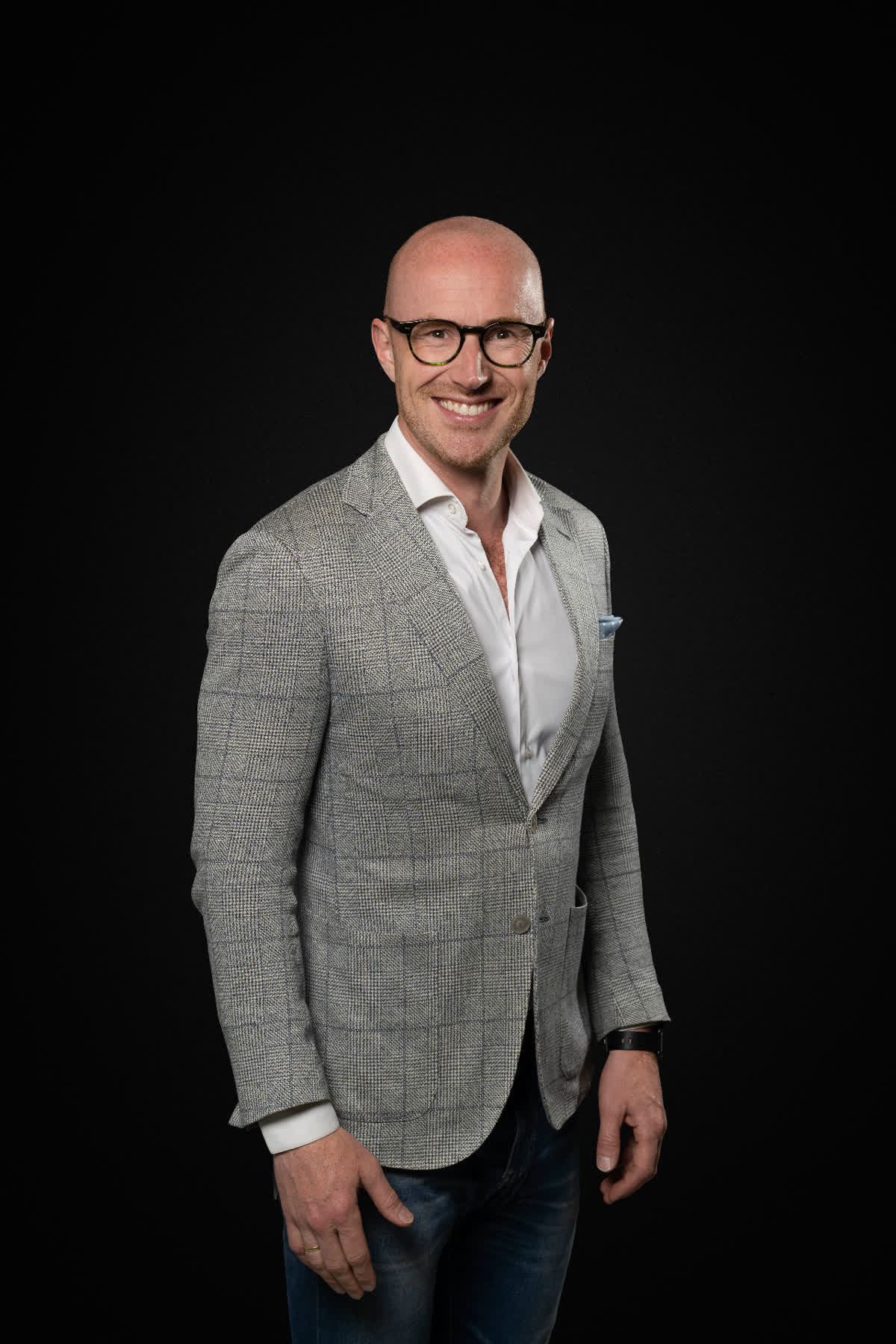
Written by Thomas Bunnik
Thomas Bunnik is a Dutch serial entrepreneur and investor. Co-founder & CEO of Whoppah, Europe's largest secondhand design marketplace. Founder of Pritle (acquired by BinckBank for €12.5M).
Learn more →Enjoyed this article?
Follow me on LinkedIn for new articles and updates on building companies.